
Top Fully Funded Scholarships 2026 Undergraduate: Apply Online Now

Top Fully Funded Scholarships 2026 Undergraduate: Apply Online Now. So you’re looking for fully funded scholarships in 2026? Smart move. Let me tell you straight up these opportunities are life changing. They cover everything. Tuition, flights, living expenses, health insurance, even your books. Basically, you get to study anywhere in the world without worrying about money.
But here’s the thing. Everyone wants them. The competition is fierce. And the application process? It can be overwhelming. I get it. I’ve seen students freeze up just looking at all the requirements.
Take a breath. You’ve got this.
What Are Fully Funded Scholarships?
Simply put, a fully funded scholarship pays for ALL your study costs. We’re not talking about a small discount or partial fee waiver. We mean everything.
These scholarships typically cover:
- Full tuition fees
- Return airfare
- Monthly living stipend
- Accommodation costs
- Health insurance
- Books and study materials
- Visa fees in some cases
Some programs even throw in extra perks. Conference travel grants. Language courses. Research funding.
The best part? Most of these aren’t loans. You don’t have to pay anything back. It’s free money to pursue your education. Fully Funded Scholarships.
Now, fully funded scholarships aren’t easy to get. They’re merit-based, need-based, or both. But thousands of students from Pakistan and other developing countries win them every year.
So why not you?
Top Fully Funded Scholarships 2026 You Should Know About
Let’s cut to the chase. Here are the most sought-after fully funded scholarships for 2026:
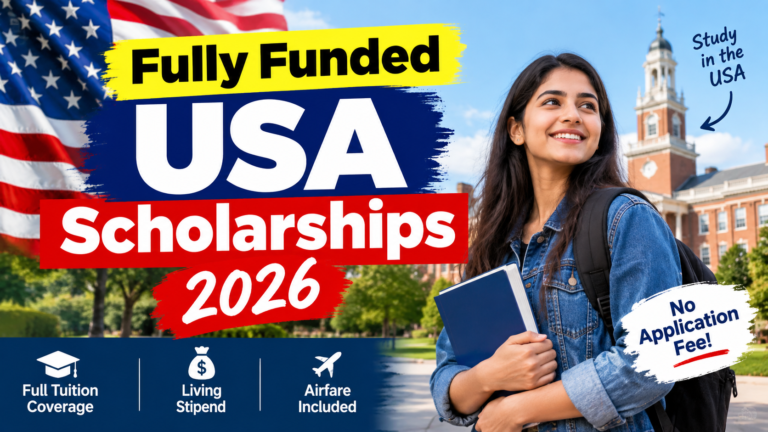
1. Fulbright Scholarships (USA)
And here it is. The Fulbright Program is perhaps the most well-known scholarship program for international students. It is sponsored by the government of the United States. Fully Funded Scholarships.
What it covers: Full tuition, living stipend, airfare, health insurance.
Eligibility: Pakistani citizen. Bachelor’s degree (16 years of education) from a recognised university. Good academic record. Pass the English language test.
Deadline: Typically May-June 2025 (for 2026 intake).
Pro tip: This scholarship is COMPETITIVE to the max! Besides good grades, your essays and interview performance are everything.
2. Chevening Scholarships (UK)
The UK government’s flagship scholarship. Chevening has been shaping the global leaders of tomorrow for decades.
What’s covered: tuition fees in full, monthly allowance, travel insurance and flights, additional grants.
Selection criteria: Pakistani applicants who have at least two years work experience. A bachelor’s degree. Demonstrate leadership potential.
Deadline: Typically November each year.
Good tip: Chevening is a sucker for leadership stories. Demonstrate you’re not just a theoretical-leader sort of person you’re the real deal.
3. DAAD Scholarships (Germany)
Germany is becoming the new destination of choice for Pakistani students. The DAAD is making it affordable.
What it offers: Monthly allowance (850), health insurance, travel subsidy, tuition fees (the majority of German public universities don’t charge tuition fees at all).
Requirements: A Bachelor’s or Master’s program. Language skills in German or English. Prior work experience often needed.
Application Deadlines:
For most Programs: October to December of the next academic year.
Pro tip: DAAD is always interested in applicants who can motivate their career plans. Show us how your studying in Germany will be advantageous for Pakistan.
4. Erasmus Mundus Joint Master’s Programs (Europe)
Interested in studying in several EU countries? This is your chance.
What it covers: Tuition fees paid in full, round trip travel expenses, installation allowance, monthly stipend (roughly 1,400).
Who can apply: Candidate should be of bachelor’s qualification. Candidate should hold English language. There is no any age bar.
Deadline: Usually October to January.
Pro tip: Only apply to these programs if they are actually a fit. So much work goes into these applications, make sure it’s worth your time.
5. Commonwealth Scholarships (UK)
For student from your home country – Pakistan is among them.
What it is: Covering, tuition, airfare, accommodation, scholarship, thesis grant.
Eligibility: Commonwealth citizen. First-class honours degree. Be financially disadvantaged.
Deadline: Usually September to November.
Bonus tip: Also pay attention to the financial need criterion. Be truthful and provide as much detail about your finances as possible.
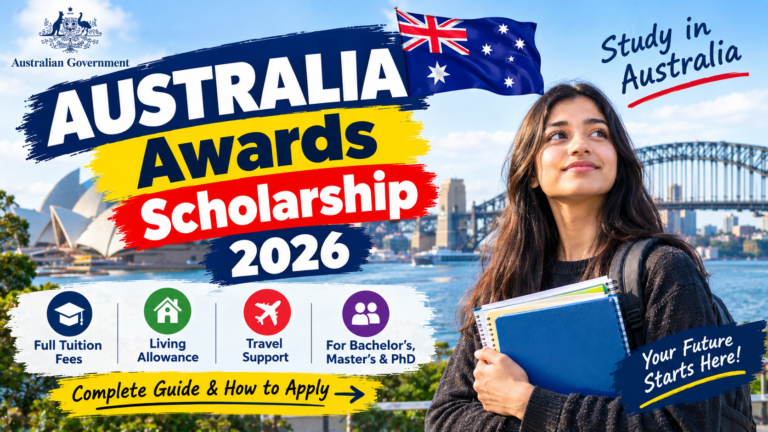
6. Australia Awards Scholarships
The aid designed scholarship plan for scholars from creating nations.
What is covered: Full tuition, airfare, living expenses, health insurance, pre-course training.
Eligibility: Pakistan National. Bachelor’s degree. At least two years of working experience.
Deadline: Usually February each year.
Pro tip: These is no such thing as development related scholarships. Explain in how this education will give you the tools to develop Pakistan.
7. Chinese Government Scholarships (CSC)
There are unlimited fully funded scholarships in China for International students every year.
What it covers: Full tuition, accommodation, monthly stipend $3,000 per month for master’s degree, $3,500 per month for doctoral degree, health insurance.
Criteria: Bachelor’s degree for master’s. Master’s degree. Must be in good health.
Deadline: Usually December to March.
Pro tip: Apply via the Chinese Embassy in Pakistan. Begin the application process several months before the interview appointment.
8. Türkiye Scholarships (Turkey)
Turkey has become a popular destination. Their government scholarship program is excellent.
What it covers: Full tuition, monthly stipend (₺3,500), accommodation, health insurance, flights.
Eligibility: Bachelor’s degree. Strong academic record. Age limits (under 30 for master’s, under 35 for PhD).
Deadline: Usually January to February.
Pro tip: You’ll need to pass a written exam. Prepare well in advance.
Also Check: HEC Scholarships Guide for Pakistani Students: Apply Online Now
Eligibility Criteria For
Let’s be real. Scholarship eligibility can be confusing. Different programs have different rules.
But here’s what most top fully funded scholarships 2026 opportunities look for:
Academic Excellence
Most require a minimum GPA. Usually 3.0 on a 4.0 scale or equivalent. Some are stricter – especially top-tier programs like Fulbright.
Language Proficiency
You’ll need English tests. Usually TOEFL or IELTS. Some scholarships accept alternative proof.
Work Experience
Chevening, Australia Awards, and DAAD often require 1-2 years of professional experience. Fresh graduates may not qualify.
Age Limits
Some programs have age limits. For example, Türkiye Scholarships have specific age caps.
Country Restrictions
Most scholarships target specific countries. Pakistani students are eligible for almost all of them.
Field of Study
Some scholarships restrict to certain fields. Others are open to all disciplines. Check carefully.
Health Requirements
You’ll need a medical check-up. Some countries require specific vaccinations.
| Scholarship | Country | GPA Requirement | Work Experience | Age Limit |
|---|---|---|---|---|
| Fulbright | USA | 3.0+ | Not required | No limit |
| Chevening | UK | Upper second class | 2+ years | No limit |
| DAAD | Germany | Varies | Often required | No limit |
| Erasmus Mundus | Europe | Varies | Not required | No limit |
| Commonwealth | UK | Upper second class | Not required | No limit |
| Australia Awards | Australia | Varies | 2+ years | No limit |
| CSC | China | Varies | Not required | Usually under 35 |
| Türkiye | Turkey | Varies | Not required | Under 30-35 |
What’s Actually Covered? Breaking Down the Benefits
Let’s stop being vague. What does “fully funded” actually mean in real life?
Tuition Fees
This is obvious. But pay attention some scholarships only cover a portion of tuition. “Fully funded” means 100%.
Living Stipend
This is your monthly allowance. Amounts vary widely:
- Chevening: Around £1,200-1,400 per month
- DAAD: €850 per month
- CSC: ¥3,000 per month
- Türkiye: ₺3,500 per month
Accommodation
Some scholarships provide free housing. Others give you an allowance to find your own place.
Airfare
Most provide return economy-class tickets. Some even include additional travel grants for research.
Health Insurance
This is usually covered. Don’t skip this – medical costs abroad can be astronomical.
Books and Materials
You’ll get a small budget for academic materials. Usually not enough for everything, but it helps.
Additional Benefits
Visa fees. Conference travel. Language courses. Research expenses.
The Catch
Here’s the thing some scholarships expect you to return to your home country after completing your degree. Called a “home residency requirement.” Chevening and Fulbright have this. Not a deal-breaker, but something to plan for.
Documents Required
Let me save you time. Here’s what you’ll most likely need:
The Basics
- Passport
- Passport-size photographs
- Birth certificate
Academic Documents
- Transcripts from all previous institutions
- Degree certificates
- Equivalence certificates
- Research proposal
Language Tests
- IELTS or TOEFL scores
- Language proficiency certificates for other languages
Letters of Recommendation
Typically 2-3 Academic or Professional References. References should be familiar with your skills and experience. Not just your most popular teacher.
Statement of Purpose / Motivation Letter
This is Critical. Please drive this in your head. The SOP is the deciding factor for your application.
CV / Resume
Highlight your educational and professional background. Research work, publications, volunteer activities.
Work Experience Letters
Gather references from past employers if needed.
Financial Documents
Some scholarships may require proof of income and/or bank statements.
Medical Certificate
A health check report from a medical practitioner registered with a medical council.
Police Clearance Certificate
For background verification.
Tip: Keep these documents handy for at least 6 months ahead of time. It takes a while to get approved internationally. Don’t leave it for the last minute.
How to apply for
Let’s try this out: If you have stumbled on a scholarship that is perfect:
Step 1: Research Thoroughly
Don’t just go blindly. Go to the official site. Read through everything. Know the mission.
Step 2: Check Eligibility
Make sure you satisfy EACH requirement. If you do not qualify, please do not apply.
Step 3: Prepare Documents Early
Allow a minimum of 3-4 months before the deadline. And give your referees lots of time.
Step 4: Write a Killer SOP
This is another the requires its own section, below. Just don’t rush it. Write, re-write, and have people read it.
Step 5: Complete Online Application
Complete all forms. Submission errors are tossed out. Reread.
Step 6: Submit Before Deadline
It happens. Systems go down. Submit at least 24 hours early.
Step 7: Interview Preparation
Interviews –if called for You’ll probably be asked to attend an interview. Prepare for some typical interview questions. Be thoroughly familiar with your application.
Step 8: Accept and Prepare
Congratulations if you’ve been successful! That’s just the start, now you’ve got to apply for your visa, go through the medical process and pack up ready to fly out.
Important Dates and Deadlines 2026
Scholarship deadlines follow patterns. Here’s what to expect:
| Scholarship | Typical Application Period | Expected Deadline 2026 |
|---|---|---|
| Fulbright | May – June | June 2025 |
| Chevening | August – November | November 2025 |
| DAAD | October – December | Varies by program |
| Erasmus Mundus | October – January | January 2026 |
| Commonwealth | September – November | November 2025 |
| Australia Awards | February – April | April 2026 |
| CSC | December – March | March 2026 |
| Türkiye | January – February | February 2026 |
Important: Note: Dates are estimates. NEVER rely on these dates. SCHOLARSHIPS update deadlines frequently.
How to Increase Your Chances of Selection
To be honest That’s how most candidates appear to do it. Here’s how you’re going to be different:
1. Start Early
Just two weeks before the deadline? You’d be surprised how many students start their scholarship research that late. Don’t be one of those guys. Begin at least 6 months prior.
2. Tailor Your Application
All application submissions will be denied. Demonstrate how you understand the intent of the scholarship. Tie your aspirations back to theirs.
3. Get Strong Recommendations
Pick references who can address your particular strong points. Don’t just get the standard “good student” letter.
4. Write a Specific Research Proposal
For PhDs your proposal needs to be focused, feasible and fabulous. Ask the academics.
5. Show Leadership
Most top scholarships look for leadership potential. Highlight any leadership roles – even small ones count.
6. Be Authentic
They’re sifting through thousands of applications. They can tell when your enthusiasm is fake from a mile away. Be authentic.
7. Practice Your Interview
If you do get an interview, take it seriously. Practice with friends. Record yourself. Get feedback.
8. Proofread Multiple Times
Types and grammar errors look like a lack of care. Have someone else review your application.
9. Consider Your “Fit”
Choose the right scholarships for your profile and ambitions. Don’t waste your efforts on every scholarship.
10. Stay Organized
Build out a spreadsheet for deadlines, requirements, statuses. Anything you can think of.
Common Mistakes to Avoid
Here’s where most students mess up:
Applying to Too Many Programs
Quality over quantity. A few targeted, well-prepared applications beat 20 rushed ones.
Missing Deadlines
The #1 reason applications get rejected. Not missing, but being rejected before consideration.
Submitting Incomplete Applications
Read the requirements carefully. Missing documents = automatic rejection.
Writing Generic Personal Statements
Copy-paste from other applications? Bad idea. Each scholarship wants something specific.
Underestimating Essays
Your essays matter more than your GPA sometimes. Take them seriously.
Choosing the Wrong Referees
A professor who barely knows you isn’t helpful. Choose people who can give specific examples.
Ignoring Language Requirements
Submitting without required test scores? Your application won’t even be reviewed.
Not Researching the Institution
Know why you want to study at that specific university. Generic answers don’t work.
Forgetting to Proofread
Typos in your SOP? Instant turn-off.
Not Explaining Gaps
If there are gaps in your academic or professional history, explain them briefly.
Frequently Asked Questions
When should I start applying for fully funded scholarships 2026?
Start at least 6-8 months before deadlines. Most top scholarships have deadlines between October and December 2025. Begin researching in early 2025, prepare documents by summer, and apply when applications open.
Can I apply if I have an average GPA?
It depends. Scholarships like Fulbright and Chevening are very competitive and require strong GPAs. However, some scholarships consider work experience, research, and leadership qualities more than grades. Don’t let a moderate GPA stop you, but be realistic about your chances.
Do I need work experience for fully funded scholarships?
Not always. Fulbright, Erasmus Mundus, and CSC don’t strictly require work experience. Chevening, Australia Awards, and DAAD often require 1-2 years. Check individual requirements carefully.
What’s the hardest part of the application?
Without question, the Statement of Purpose. Most students struggle to write compelling, authentic essays. I’d say it’s 40% of your application’s success. The interview is also challenging if you’re shortlisted.
Can I apply without IELTS/TOEFL?
Some scholarships make exceptions. If your previous education was entirely in English, you might be exempt. But generally, you need a valid test score. Start preparing early – language tests take time.
Do I have to return to Pakistan after studying?
Many scholarships have a home residency requirement. You must return for 2 years after completing your studies. Some allow exceptions. Check the fine print.
Conclusion
Let’s be real. Applying for fully funded scholarships in 2026 is tough. It takes time, effort, and resilience. There will be rejections. There will be frustration.
But here’s the thing – thousands of Pakistani students win these scholarships every year. Why not you?
Start now. Don’t wait for the “perfect moment.” Start researching this week. Start preparing documents next week. Start writing your SOP the week after.
One step at a time. That’s how you get there.
And remember, you can do this. I’ve seen students with average grades win prestigious scholarships. I’ve seen students from small towns in Pakistan study at Harvard, Oxford, and Cambridge. They were just like you. They were nervous. They doubted themselves.
But they applied anyway. And they won.
Your turn.


One Comment